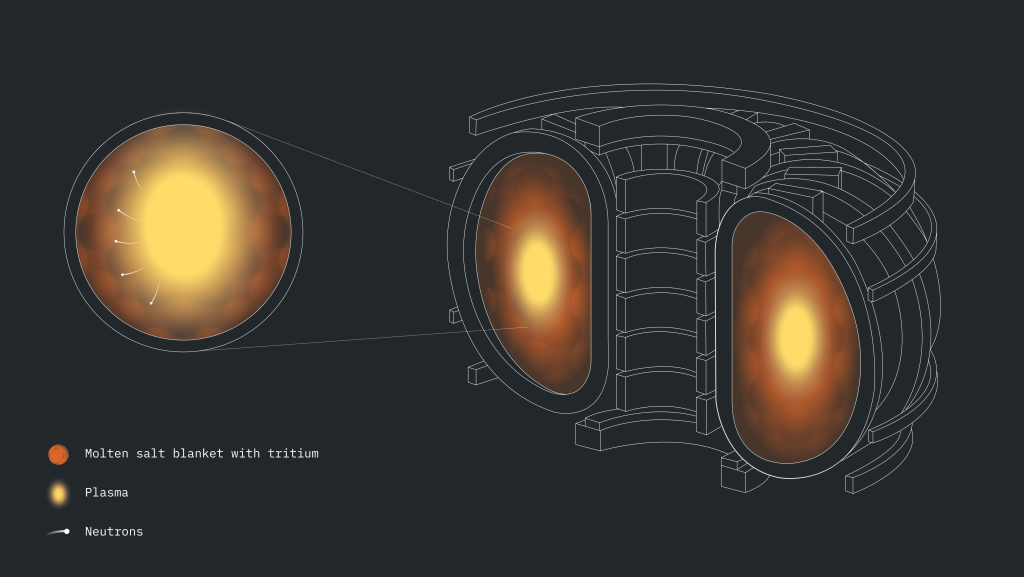
In a future tokamak, neutrons released from the plasma during fusion could bombard the surrounding molten salt blanket to create tritium. (Image: IBM)
Researchers have reported using a combination of quantum and classical computing to calculate chemistry connected to tritium speciation in a FLiBe—lithium fluoride and beryllium fluoride—molten salt blanket, demonstrating a promising direction for unlocking tritium breeding in fusion machines.
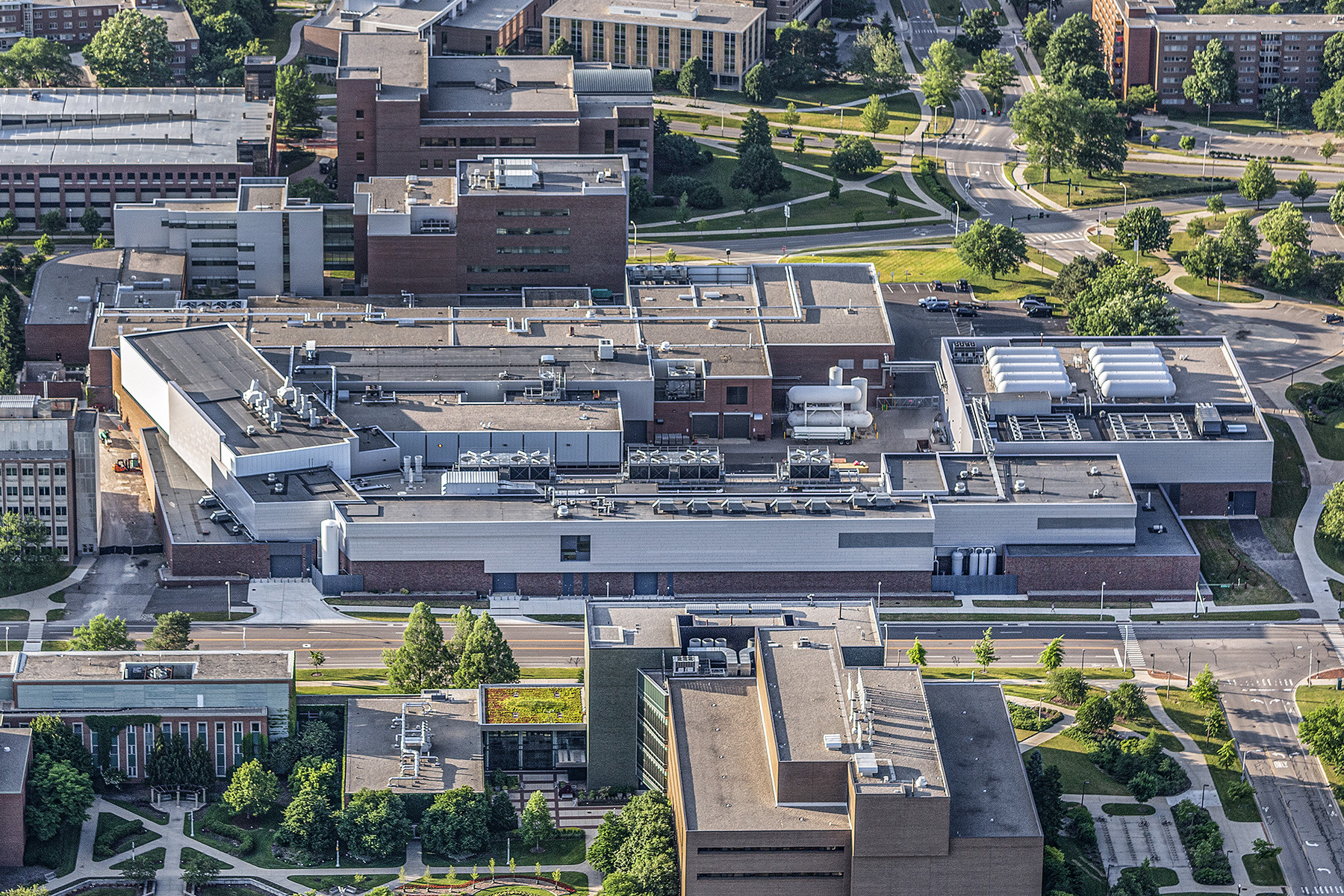
An aerial view of the Facility for Rare Isotope Beams on the Michigan State University campus in East Lansing, Mich. (Photo: FRIB)
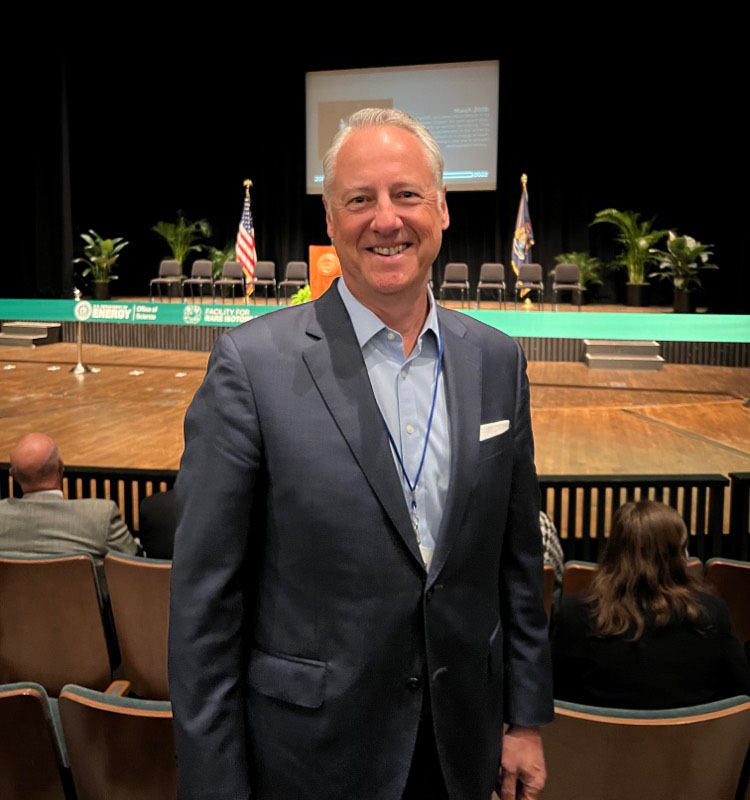
Michigan State University’s Facility for Rare Isotope Beams (FRIB) officially opened yesterday with a ribbon-cutting ceremony attended by Energy Secretary Jennifer Granholm, elected officials, and guests who had supported the project during its planning and construction, including ANS Executive Director/Chief Executive Officer Craig Piercy. They were there to celebrate the completion—on time and within budget—of the world’s most powerful heavy-ion accelerator and the first accelerator-based Department of Energy Office of Science user facility located on a university campus.